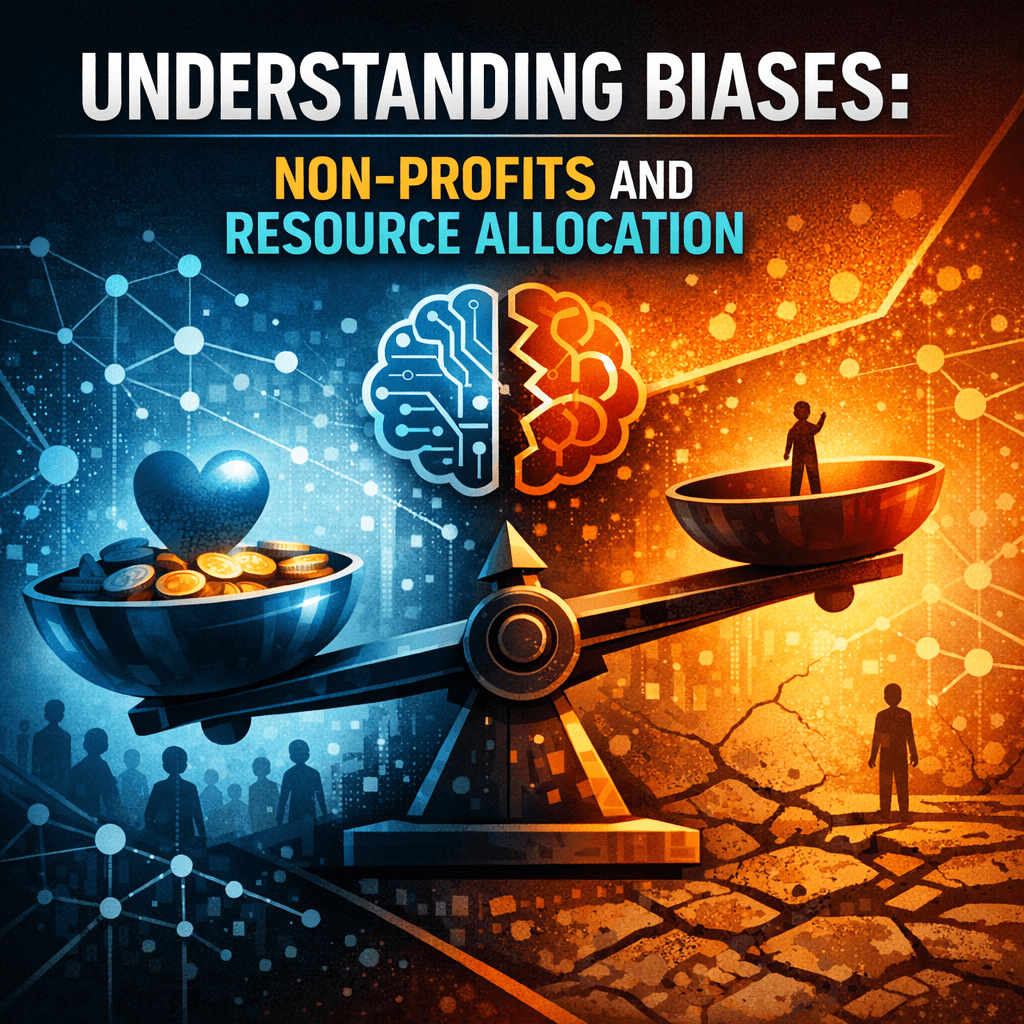
Understanding Biases: Non-Profits and Resource Allocation
Discover how biases affect decision-making in non-profits for better impact.

Understanding Cognitive Biases in Non-Profit Decision-Making
Cognitive biases are inherent thought processes that can unwittingly sway decision-making in non-profits. These biases often lead to skewed resource allocation, impacting an organization's ability to fulfill its mission. By identifying these biases, non-profits can better align their strategies to ensure resources are used effectively.
An example of a common bias is the "recency bias," where recent events disproportionately influence decision-making. In resource allocation, this could lead non-profits to prioritize immediate issues over long-term goals. Tools like FlowPost can assist by maintaining a balanced perspective in content strategy, thereby mitigating recency bias in communication.
Another significant bias is the "confirmation bias," where decision makers favor information that aligns with their preconceptions. This can limit a non-profit's ability to innovate and adopt new strategies for resource allocation. Employing diverse teams and varied data sources can help counteract this bias, offering a more objective viewpoint.
Overcoming the Influence of Social Bias
Social biases often affect how resources are allocated within non-profits. These biases can manifest as favoritism towards certain programs or groups, based on perceived social norms or pressures. By acknowledging these biases, non-profits can work towards equitable resource distribution.
One way to manage social biases is by implementing clear criteria for resource allocation. This approach ensures decisions are made based on merit and need rather than social influence. Non-profits can further leverage platforms such as FlowPost's LinkedIn content automation to present unbiased information and maintain transparency.
Training and awareness programs can also aid in reducing social biases. Educating teams about the pitfalls of social bias encourages more equitable decision-making. Regular evaluations of past allocation decisions can serve as learning tools to prevent future biases.
Resource Allocation Bias and Financial Management
Financial resources in non-profits are often subject to allocation biases, impacting the organization's operational effectiveness. These biases might lead to overspending on high-visibility projects rather than equally worthy but less visible ones. Awareness of financial biases can help non-profits allocate resources more judiciously.
Financial training programs can educate decision-makers about the risks of financial bias. These programs can illustrate best practices, ensuring funds are distributed in ways that align with organizational goals. Utilizing data from FlowPost's Facebook post timing insights can provide further evidence for balanced resource distribution strategies.
Implementing financial oversight boards is another method to mitigate this bias. Oversight boards ensure that financial decisions are peer-reviewed and transparent. Such structures can significantly reduce the likelihood of bias influencing financial resource allocation.
The Role of Implicit Bias in Non-Profit Operations
Implicit bias operates subconsciously, making it a challenging yet crucial area for non-profits to address. This type of bias often influences decisions regarding staffing and volunteer allocation. Recognizing implicit bias can profoundly impact a non-profit's culture and efficiency.
Developing bias-free recruitment processes is essential for addressing implicit biases. Non-profits can utilize standardized testing and blind recruitment practices to ensure talent is assessed purely on merit. Regular training programs focusing on diversity and inclusion can also mitigate implicit bias in staffing decisions.
For example, FlowPost's Instagram image size guide emphasizes unbiased, data-driven image strategies, paralleling how non-profits might develop unbiased staffing approaches. With systematic tools and training, implicit bias in resource allocation can be substantially curbed.
Addressing Biases in Strategic Planning
Strategic planning in non-profits can often fall prey to bias, leading to misaligned priorities. This is particularly true when short-term gains overshadow long-term sustainability. Acknowledging these biases is crucial for strategic effectiveness.
Using objective metrics can guide non-profits in making unbiased strategic decisions. For instance, Buffer's best times to post on Instagram research shows how data can drive decision-making without falling prey to prevailing biases. Regular strategy evaluations can further ensure that strategic alignment is maintained without bias.
Inviting diverse stakeholders into strategy discussions can also counteract inherent biases. A varied group brings multiple perspectives, reducing the risks of groupthink. By expanding the diversity of input, non-profits can create more robust, unbiased strategic plans.
Technology as a Tool to Mitigate Bias
The strategic use of technology in non-profits can significantly reduce bias in resource allocation. Technological tools can provide objective data and analytics, offering insights free from human prejudice. Informed by these insights, non-profits can allocate resources more equitably.
Platforms like B Squared Media's social media automation cheat sheet offer examples of how technology can streamline operations and reduce bias. These tools simplify complex processes, making resource allocation decisions more data-driven and less subjective.
Non-profits can also use technology for simulation and testing of resource allocation models. By visualizing different allocation scenarios, biases can be quickly identified and corrected. Technology thus serves as both a mirror and a guide in non-profit resource allocation.
Cultural Biases and Their Impact on Resource Allocation
Cultural biases are prevalent in many non-profit organizations, influencing decision-making in various ways. These biases can hinder a non-profit's ability to serve diverse communities effectively. Understanding and addressing cultural biases can enhance resource allocation strategies.
Non-profits should conduct regular cultural competence assessments to identify potential biases. Such evaluations ensure that programs and resources are inclusive and culturally sensitive. Implementing practices recommended in FlowPost's blog on myths about building online businesses can parallel efforts to dispel cultural myths within organizations.
Furthermore, investing in cultural sensitivity training for staff can foster an inclusive work environment. A workforce that understands and respects cultural differences can better serve a diverse client base. This, in turn, leads to more effective and unbiased resource allocation.
The Impact of Personal Biases on Leadership Decisions
Leadership decisions in non-profits often reflect personal biases, which can significantly affect resource distribution. These biases might lead to favoritism or aversion towards specific projects or team members. Recognizing these personal tendencies is key to fair and equitable leadership.
Creating a transparent decision-making process can help mitigate personal biases in leadership. By involving multiple leaders and stakeholders, decision-making becomes more balanced and less susceptible to individual biases. Reddit's preferred social media scheduling app discussion illustrates how community input enriches decision-making, a principle non-profit leaders can emulate.
Additionally, leadership coaching can be instrumental in helping leaders recognize their biases. Regular feedback from peers and subordinates can provide leaders with insights into their personal biases and encourage more balanced resource allocation.
Communicating Decisions: Transparency in Resource Allocation
Transparent communication is essential in addressing biases in non-profit resource allocation. Clear, open communication builds trust and ensures stakeholders understand decision-making processes. By prioritizing transparency, non-profits can more effectively manage resources and stakeholder expectations.
Publicizing decision-making frameworks can ensure alignment with organizational goals. Using FlowPost's trends from freelancing on LinkedIn as a model, non-profits can standardize communications that reflect equitable processes. Regular updates on decisions and outcomes reinforce transparency and community trust.
Feedback loops are also important to refine communication strategies. Open channels for receiving and addressing feedback help strengthen relationships with stakeholders. This, in turn, encourages ongoing support and engagement from donors and volunteers.
Conclusion: Streamlining Bias-Free Resource Allocation
Addressing biases in non-profit decision-making is essential for effective resource allocation. By recognizing and mitigating cognitive, social, financial, implicit, and cultural biases, non-profits can enhance their strategic impact. Utilizing tools like FlowPost's guides and automations can support these efforts.
Implementing structured decision-making processes and promoting a culture of transparency are also crucial. Training programs and technology can further aid in addressing biases, ensuring more equitable resource distribution. By proactively managing biases, non-profits position themselves for greater impact and success in their missions.